Mold removal after water damage in Bellingham
A wall that stays wet for a week inside a closed-up Bellingham house is where mold gets its start. The EPA's advice comes in two parts: dry wet materials inside 24 to 48 hours, and fix the source of moisture before or during cleanup, since mold grows back wherever the water returns. Fixr's national span for remediation is $1,500 to $9,000.
On this page
The Bellingham version of the problem
Gulf Coast mold comes from heat and humidity. Ours comes from duration. The airport averages 169 days a year with measurable rain, and November through January bring roughly 18 to 20 wet days each. Windows stay shut for months, cooking and showers add vapor, and any leak that would dry out in an Arizona week stays damp here until spring. A crawl space that drains poorly can stay damp all winter.
Places to check first: the lower edge of outside walls behind dressers and beds, and sills that are wet every morning. Bathrooms whose fan doesn't work or vents into the attic come next, followed by the attic itself, where a disconnected fan duct can soak the insulation. How the wet season shows up indoors.
Doing it yourself
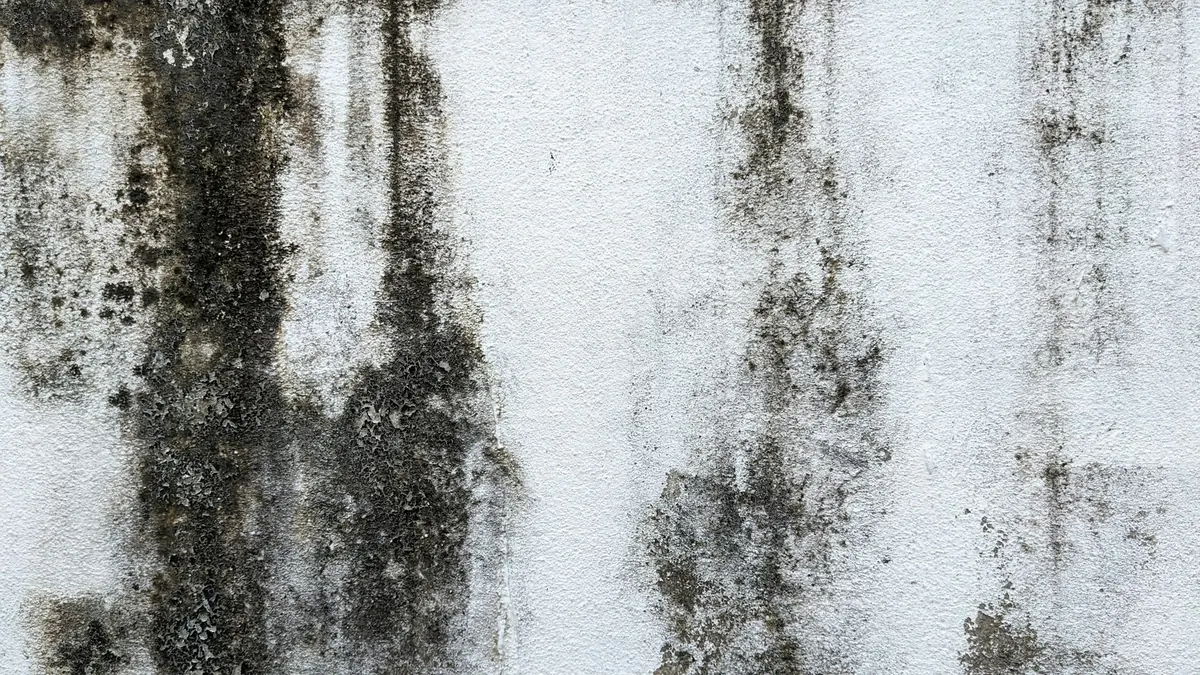
If it is small, yes. The EPA's line is about 10 square feet, a patch roughly 3 feet on each side; below that, most homeowners can clean it themselves. Above that size, inside the heating ducts, or anywhere sewage or floodwater reached, hire a professional. Washington's Department of Health says testing usually isn't needed when you can already see or smell the mold. Wear an N95 and gloves. Scrub hard surfaces with detergent and water, let them dry, and bag up porous items that grew mold.
How a professional job runs
- Moisture source first. A roof flashing, a crawl space drain or a plumbing drip has to be fixed, or the money spent on removal comes back as mold next winter.
- Containment. Poly sheeting and a fan pulling air out of the work area keep spores from drifting into the rest of the house.
- Removal of moldy drywall, insulation and carpet.
- Cleaning and drying of framing and subfloor that can stay.
- A final check, visual and by meter, before new material goes up.
Published prices
| What | National figure | Who published it |
|---|---|---|
| Remediation job, Fixr | $1,500 to $9,000; average $3,500 | Fixr, Aug 2025 |
| Remediation job, Bob Vila | $1,125 to $3,439; average $2,254 | Bob Vila, Apr 2024 |
| By the square foot | $10 to $30 per square foot | Fixr |
| In a crawl space | $500 to $2,000 | Fixr |
| In the HVAC system | $3,000 to $10,000 | Fixr |
| Inspection | $450 to $800; average $500 | Fixr, Jan 2025 |
These are national numbers, not a Whatcom County quote.
Washington's rules on mold work
Washington registers contractors rather than licensing restoration as a trade. Anyone doing construction or repair, including rebuilding after water or fire damage, has to register with the Department of Labor and Industries, which requires a bond and liability insurance; the L&I Verify a Contractor page shows the status. The Department of Health's mold guidance doesn't mention a separate state license for mold cleanup. With no mold-specific license to lean on, your own questions carry more weight. Ask what caused the moisture, what will be removed, how the work area will be sealed off, and which readings will show the job is finished.
Questions Whatcom County homeowners ask
Do I need a mold test before removal?
Usually no. If you can see or smell mold, the Washington Department of Health says sampling isn't needed, and the EPA agrees. A test earns its cost when mold may be hidden in a wall, when someone in the house has health concerns, or when you want documentation that the cleanup worked.
Is mold in a rental the landlord's problem?
Under RCW 59.18.060, a Washington landlord has to keep a rental livable and reasonably weathertight, with working plumbing and heat, and must hand new tenants the Department of Health's mold information. Once you give written notice, RCW 59.18.070 sets the clock: 24 hours to start on a loss of heat or water or an imminent hazard, and 72 hours or 10 days for less urgent problems. This is general information, not legal advice.
How fast does mold grow after water damage?
The EPA's guidance is to get water-damaged materials and belongings dry within 24 to 48 hours to keep mold from starting. In Bellingham, where winter air stays cool and damp for weeks at a time, a soaked wall cavity won't get there without dehumidifiers.
Sources
- US EPA: A Brief Guide to Mold, Moisture and Your Home (updated February 18, 2026)
- US EPA: Mold Cleanup in Your Home (updated June 4, 2026)
- Washington State Department of Health: Mold (checked October 29, 2026)
- CDC: Mold (September 26, 2024)
- Fixr: Mold Remediation Cost (updated August 29, 2025)
- Bob Vila: Mold Remediation and Removal: What to Know and How Much You'll Pay (updated April 17, 2024)
- Fixr: Mold Inspection Cost, Mold Testing Cost (updated January 31, 2025)
- NOAA Applied Climate Information System: Bellingham International Airport daily data (GHCN USW00024217)