
Bellingham rain and mold
Bellingham isn't especially rainy by inches: the airport averages 33.8 inches a year. What it has is a long wet season. About 69 percent of the year's rain falls from October through March, on 169 wet days a year, and a house closed up through that stretch holds onto every drop that gets in.
On this page
The wet season in numbers
From NOAA daily records at Bellingham International Airport, 1991-2020: November is the wettest month at about 5.18 inches. December averages 20 days with measurable rain and July only 4. Heavy days have become more common: the airport averaged 4.6 days a year with an inch or more of rain over 2016-2025, against 2.8 over 1991-2020. The wettest single day on record was 3.3 inches on January 12, 1976.
Average days with measurable rain, by month
Why that grows mold indoors
The EPA says the key to mold control is moisture control, and to keep indoor humidity below 60 percent. In a Bellingham winter, the moisture comes from three places. Rain finds its way in through roofs and around windows. Groundwater and runoff reach foundations and crawl spaces, especially on hillside lots around Lake Whatcom and Chuckanut. And daily life adds water vapor that condenses on cold windows and exterior walls, because the house is closed up for months.
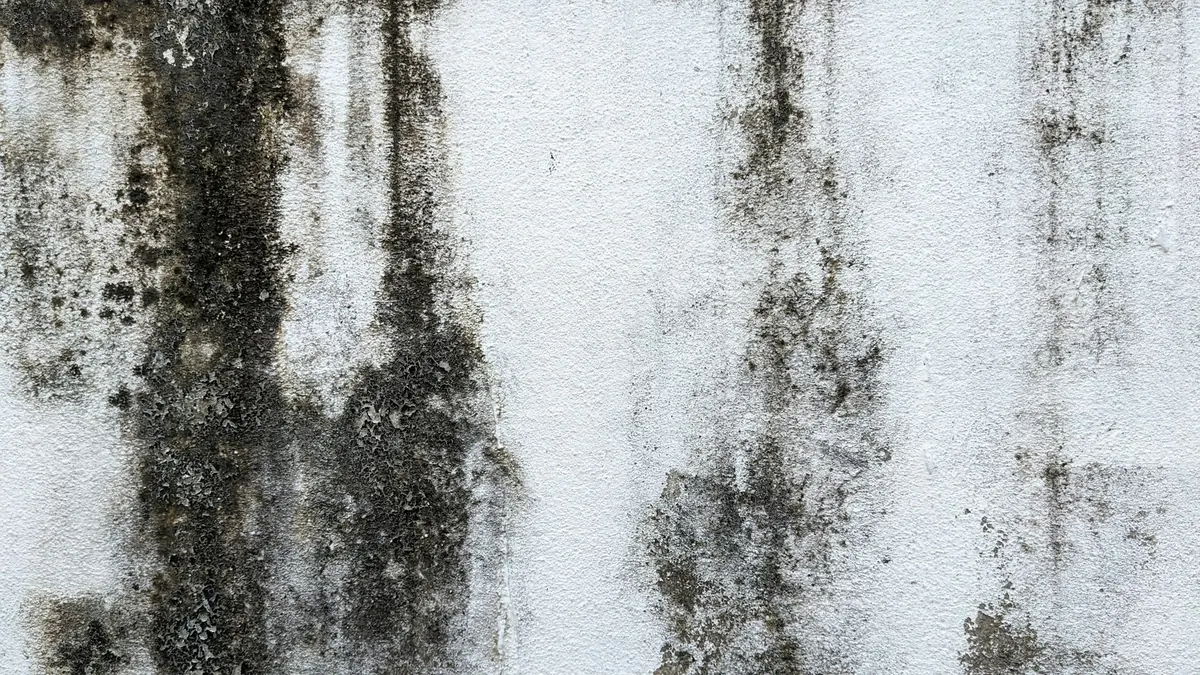
Where to look
- Window sills and frames with condensation every morning.
- The bottom of exterior walls behind beds and couches.
- Bathroom ceilings and closets on exterior walls.
- Crawl spaces with standing water or wet insulation.
- Attics with a bath fan that vents into the insulation, or a roof leak around a chimney or skylight.
Keeping a house dry
- Run bath and kitchen fans, vented outdoors, while you shower or cook and for a while after.
- Keep gutters clear and downspouts draining away from the foundation. Fall leaves and the November rain arrive together.
- Check the crawl space after the first big storm each fall.
- Fix leaks within a day or two. The EPA says to dry wet materials within 24 to 48 hours.
- Use a dehumidifier in a damp basement, and empty it.
When it is past a wipe-down
If it is small, yes. The EPA's line is about 10 square feet, a patch roughly 3 feet on each side; below that, most homeowners can clean it themselves. Above that size, inside the heating ducts, or anywhere sewage or floodwater reached, hire a professional. Mold removal in Bellingham.
Questions Whatcom County homeowners ask
How many days does it rain in Bellingham?
Bellingham International Airport averaged 169 days a year with at least 0.01 inch of rain over 1991-2020, and 156 over 2016-2025. Most fall from October through March (NOAA ACIS).
Is condensation on windows a problem?
A little in the morning is common in a Bellingham winter. Water running down the glass and pooling on the sill every day means the indoor air is too humid. Run fans, and watch the sills and frames for black spots.
Do I need a mold test?
Usually no. If you can see or smell mold, the Washington Department of Health says sampling isn't needed, and the EPA agrees. A test earns its cost when mold may be hidden in a wall, when someone in the house has health concerns, or when you want documentation that the cleanup worked.
Sources
- NOAA Applied Climate Information System: Bellingham International Airport daily data (GHCN USW00024217)
- US EPA: A Brief Guide to Mold, Moisture and Your Home (updated February 18, 2026)
- US EPA: Mold Cleanup in Your Home (updated June 4, 2026)
- Washington State Department of Health: Mold (checked October 29, 2026)